
Blog
Peptides vs Retinol: Which One Is Better for Fine Lines, Redness, and Skin Longevity.

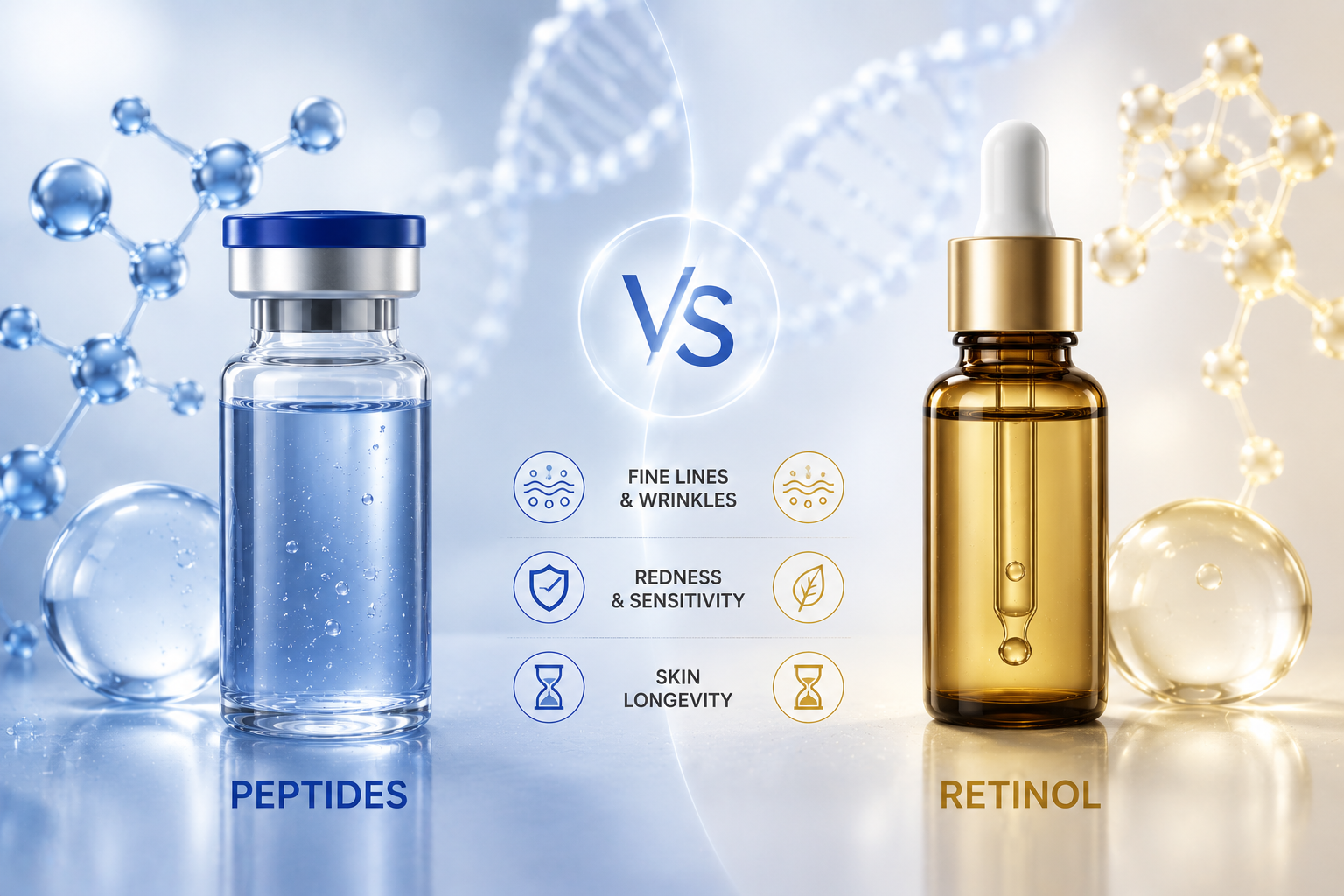
Peptides vs Retinol: Which One Is Better for Fine Lines, Redness, and Skin Longevity?
Peptides and retinol are two of the most talked-about ingredients in modern skincare. Both are commonly found in anti-aging products, both have loyal followings, and both are frequently recommended for individuals looking to improve the appearance of their skin. However, when it comes to fine lines, redness, skin barrier health, and long-term skincare goals, many consumers struggle to determine which ingredient deserves a place in their routine.
Peptides vs Retinol: Quick Answer
If your primary goal is supporting smoother-looking skin while maintaining a gentle skincare routine, peptides may be the better choice. If you're looking for a highly established ingredient often used in anti-aging routines and are comfortable managing potential irritation, retinol remains a popular option.
- Peptides are generally associated with barrier-focused skincare.
- Retinol is often used in more intensive anti-aging routines.
- Peptides are frequently preferred by sensitive skin users.
- Retinol may require a slower introduction process.
- Many modern routines combine both ingredients strategically.
What Are Peptides?
Peptides are short chains of amino acids that play an important role in many biological processes. In skincare, peptide-based products are often formulated to support healthy-looking skin, improve hydration, and complement barrier-focused routines.
Over the past few years, peptides have become increasingly popular because they align with the growing trend toward gentler skincare. Instead of relying solely on aggressive exfoliation or intensive resurfacing strategies, many consumers are adopting routines that prioritize long-term skin health and comfort.
Barrier-Friendly
Peptides are often included in skincare products designed for daily use and overall skin maintenance.
Hydration Support
Many peptide formulations are paired with moisturizing ingredients that help maintain skin comfort.
Suitable for Long-Term Use
Peptides fit naturally into skincare routines focused on consistency rather than aggressive treatment cycles.
What Is Retinol?
Retinol is a derivative of vitamin A and has been widely used in skincare for decades. It is one of the most recognized ingredients in anti-aging formulations and is commonly included in products targeting fine lines, uneven texture, and visible signs of aging.
Despite its popularity, retinol is also known for causing temporary irritation in some users, particularly during the early stages of use. This adjustment period is one reason many consumers explore alternative ingredients such as peptides.
Because retinol affects the skin differently than peptides, the choice between the two often depends on individual skin goals, tolerance levels, and routine preferences.
Peptides vs Retinol: Side-by-Side Comparison
| Category | Peptides | Retinol |
|---|---|---|
| Skin Comfort | Generally gentle | May cause irritation |
| Barrier Support | Commonly used | May require extra barrier care |
| Beginner Friendly | Often easier to introduce | Usually requires gradual use |
| Daily Routine Integration | Simple | Requires more planning |
| Sensitive Skin Appeal | Popular choice | Can be challenging |
Which Ingredient Is Better for Fine Lines?
Fine lines remain one of the most common skincare concerns. Both peptides and retinol are frequently used in anti-aging routines, but they approach skin care differently.
Retinol has a long history in cosmetic formulations targeting visible signs of aging. Peptides, on the other hand, have gained popularity among consumers seeking a gentler approach to supporting smoother-looking skin.
For many users, the best option depends on consistency. A skincare routine that can be maintained comfortably over months and years often produces better results than an aggressive routine that is difficult to sustain.
Which Ingredient Is Better for Redness and Sensitive Skin?
Sensitive skin users often prioritize comfort and barrier health above all else. Because peptides are commonly included in barrier-focused skincare formulations, they are frequently chosen by individuals looking for a gentler skincare experience.
Retinol can still be used by many individuals with sensitive skin, but it often requires careful introduction, lower strengths, and supporting products designed to maintain skin comfort.